
Published: 8 May 2026, 02:37 pm
The streets are busy, the transport options can seem endless, and figuring out how to get where you want feels like a puzzle. But honestly, once you get the hang of local transport, it’s one of the best ways to dive into Indian life and see the country from up close.
From bustling cities to little towns, this guide helps you pick the right ride, save some cash, and travel like you know what you’re doing.
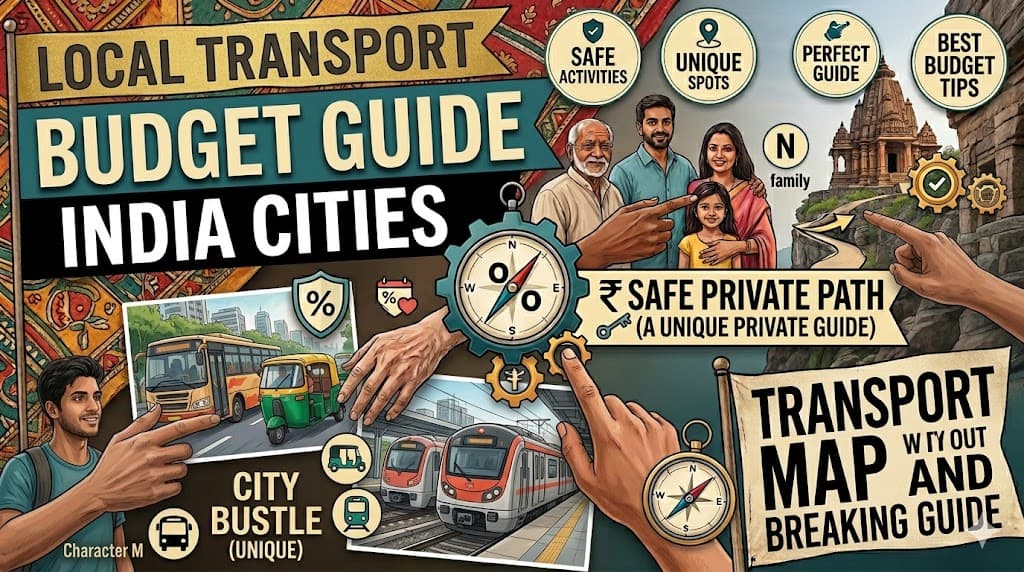
India’s transport system has it all—from shiny metro trains in the big cities to old-school auto-rickshaws zipping through narrow lanes. Here’s what you’ll find:
Every option has its own pros and quirks. Some are cheaper, others are comfier, but you’ll find something that works for you.
Buses, metros, and rickshaws run all year—but your comfort depends on the weather and the crowd. If you can, travel early in the morning (6–9 AM) or later in the evening (7–10 PM).
Try to skip rush hours (9–11 AM and 5–8 PM) and keep away from scorching summer afternoons, especially up north.
Cities like Delhi, Mumbai, Bangalore, and Kolkata have solid metro networks. They’re air-conditioned, clean, and you won’t get stuck in traffic. Metro cards save money and time, so grab one.
Buses run everywhere and cost next to nothing. The network covers most neighborhoods, but these rides can get crowded, and sometimes figuring out the route or language takes patience.
You’ll spot autos everywhere. They’re perfect for short trips or connecting between places. Always ask for the meter or settle on the fare before you hop in.
If you want a fair price, book through apps like Uber or Ola Auto.
For comfort and safety, nothing beats an app cab. Uber and Ola work in nearly every big city. They’re perfect for longer journeys or airport transfers—plus, you’ll know the price upfront.
Mumbai and Chennai’s local trains are famous for speed and affordability. They cover long distances faster than road traffic, but they’re packed during rush hour.
You’ll find these more in smaller cities or tourist spots. They’re eco-friendly, and honestly, they’re a charming way to see the sights on a slow crawl.
When you pick a place to stay, think about getting around. If you’re on a budget, staying near a bus stop or railway station makes life easier.
Mid-range hotels close to metro stations are handy for zipping around, and luxury hotels in central spots make it simple to catch cabs.
Traveling by local transport lets you experience real India. Grab snacks from street vendors near stations, wander through markets you reach by bus or auto, and just watch daily routines unfold around you.
You’ll see the city in a way taxis or tourist buses can’t show you.
Day 1: Use the metro to check out top spots, then just walk where you can.
Day 2: Grab an auto for local markets and a cab for distant places.
Day 3: Hop on a bus or cycle rickshaw and explore neighborhoods off the beaten path.
Q: What’s the cheapest way to get around?
A: Public buses and local trains top the list.
Q: Is Uber available?
A: Yup, Uber and Ola both work in most big cities.
Q: How do tourists usually travel inside cities?
A: Mostly the metro, cabs, and autos.
Q: Is local transport safe?
A: It’s safe when you follow basic tips and use reliable services.
Q: What’s best for beginners?
A: Metro trains and app cabs are super easy and safe.
Local transport in India can look chaotic, but it’s pretty easy once you get the basics down. If you’re smart about your choices, you’ll save money, move around smoothly, and experience the pulse of Indian cities.
Figuring out how to get from A to B isn’t just practical—it’s where you really start to see the culture and feel the rhythm of daily life in India.