Published: 20 May 2026, 04:54 pm
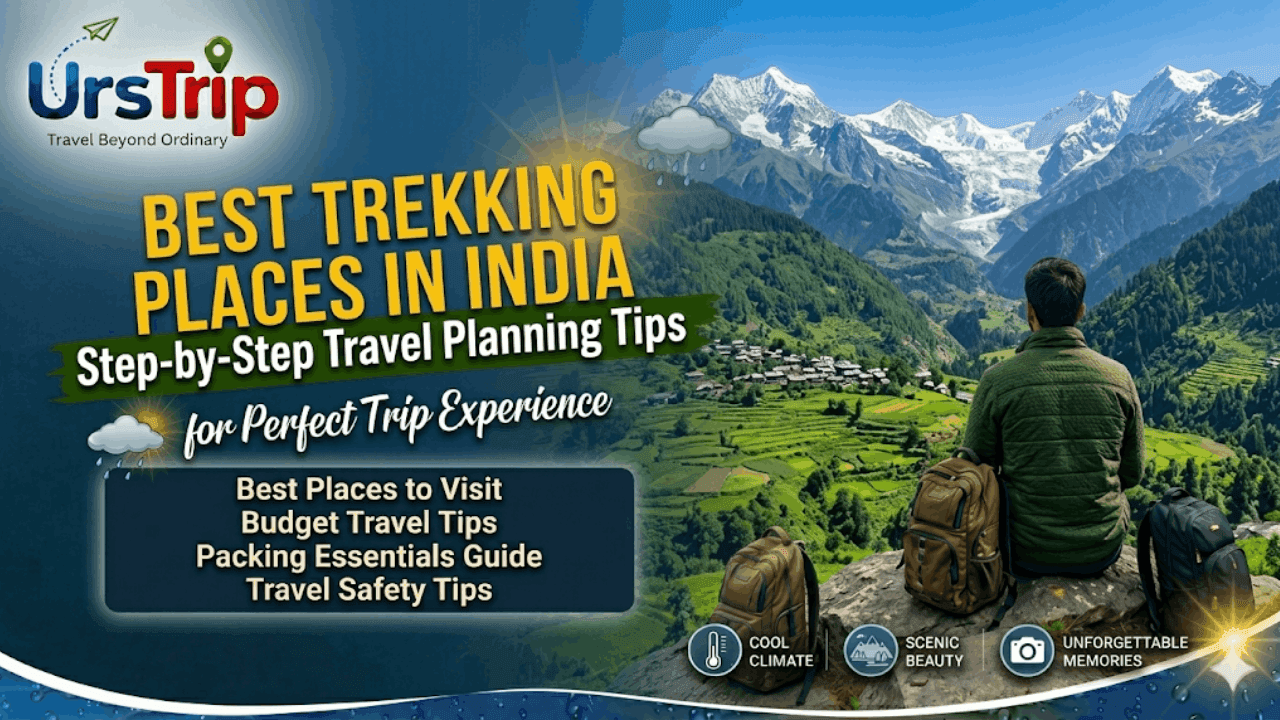
Picking the right trek is important, but honestly, the season can make or break your experience.
A trail that feels magical in spring might be dangerous in monsoon or unbearable during peak summer. Things like snow, rain, heat, and altitude completely change
the game.
If you want your adventure to be safe and memorable, you really need to know when to go.
Let’s make it simple: here’s a breakdown of India’s trekking seasons, by region.
India is huge and diverse—snowy peaks in the north, lush forests in the south, deserts out west.
So, there’s no single “best” season. It all depends on where you’re headed.
Hotspots: Manali, Leh, Uttarkashi
When to go:
Why these months?
You get clear skies, stable weather, and comfortable temps. The mountain views are at their best.
Avoid:
Hotspots: Coorg, Munnar
When to go:
Pleasant weather, lush greenery, and safer trails.
Note:
Monsoon (June to September) is only for experienced trekkers—slippery and risky.
Hotspot: Jaisalmer
Best time:
Cool, comfortable, and ideal for desert hikes and camel rides.
Avoid:
Hotspots: Gangtok, Tawang
When to go:
Moderate weather and stunning views.
Avoid:
Hotspot: Pachmarhi
Best time:
Comfortable weather and safe forest trekking conditions.
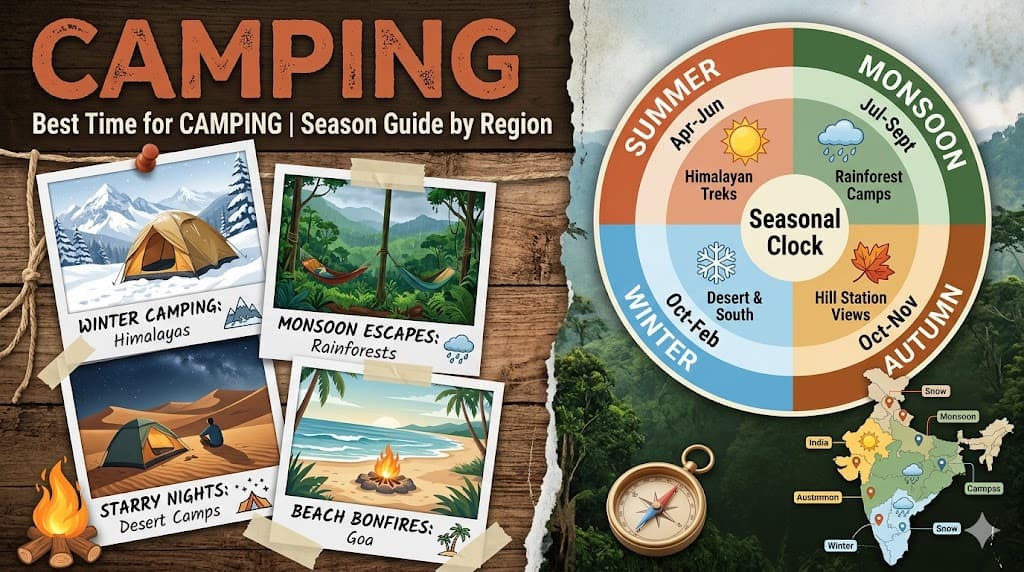
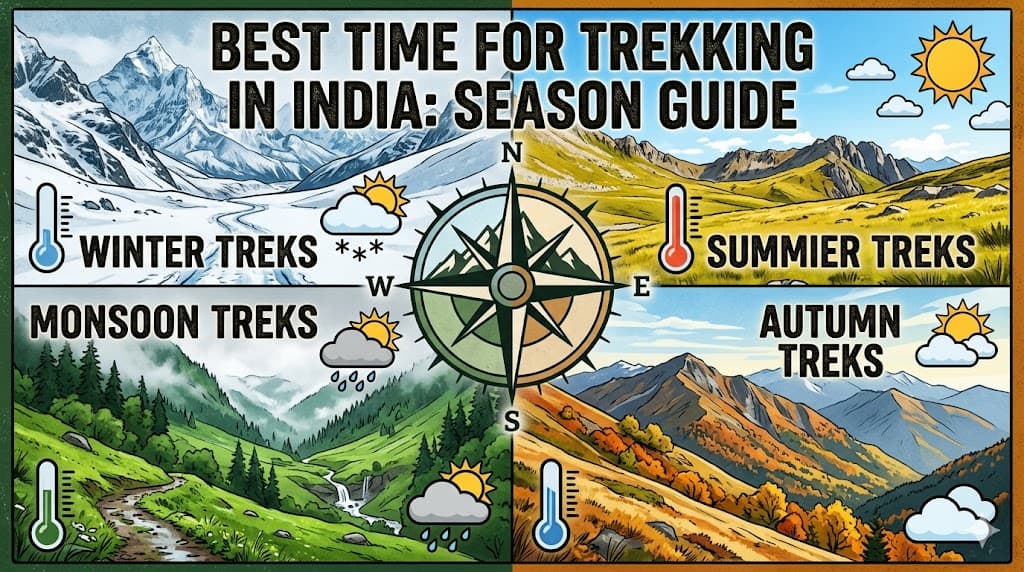
| Season Best For | |
| Summer (Mar–Jun) | Himalayas |
| Monsoon (Jun–Sep) | Western Ghats (experienced trekkers only) |
| Autumn (Sep–Nov) | Himalayas (best overall) |
| Winter (Dec–Feb) | Snow treks & desert hikes |
Ask yourself:
Day 1: Arrive and acclimatize
Day 2: Start trekking
Day 3: Reach summit/viewpoint
Day 4: Descend
Day 5: Return
Best season overall?
Autumn (September–November)
Beginners in monsoon?
Not recommended
Winter treks safe?
Yes, with proper gear
Best summer region?
Himalayas
Timing really is everything in trekking.
The right season means:
✔ Beautiful views
✔ Comfortable trails
✔ Safe journey
The wrong season? Tough experience.
Plan smart, choose wisely, and every step becomes unforgettable.